The Psychology of Brand Choice
We don't buy products, we buy a version of ourselves. The psychology of brand choice, and why your brand is really selling identity, not features.
June 16, 2026
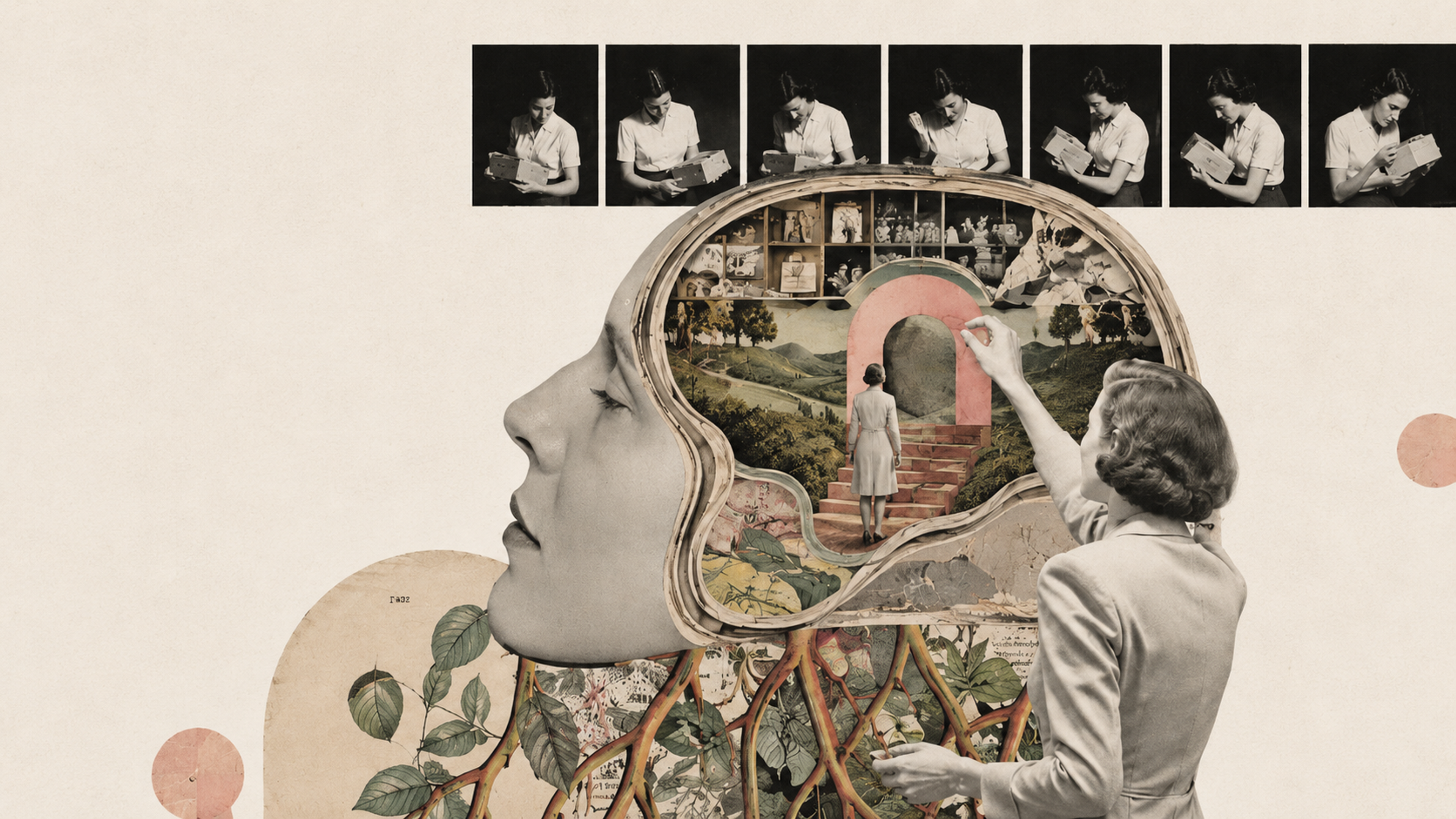
People do not buy products. They buy a version of themselves. Decades of consumer research point to the same conclusion from three different angles: what we own becomes part of who we are, we choose the brands used by the people we want to be, and we form real relationships with those brands. Your customer is not shopping for features. They are shopping for an identity.
Your possessions become part of you
In a 1988 paper that became one of the most cited in all of consumer research, Russell Belk argued something simple and a little unsettling: we are what we have. Our possessions are not just things we use. We treat them as parts of ourselves, what Belk called the extended self.
The evidence is everywhere once you look. Burglary victims often describe a break-in as a personal violation, not just a financial loss, as if a piece of them had been taken. We pour time, care, and attention into the things we own, and in doing so we fold them into our identity. Belk's argument landed hard because it moved the question away from whether a product works and toward what it means. A purchase is rarely just a purchase. It is a small act of building the self.
You choose the ones that signal who you want to be
If our things become part of us, which things do we choose? In a 2003 study with the memorable title "You Are What They Eat," Jennifer Escalas and James Bettman showed that we pick brands based on the people who use them. They called it a self-brand connection: the degree to which you have folded a brand into your sense of self.
We do it with two kinds of groups. The groups we already belong to, to confirm who we are, and the groups we want to join, to become who we want to be. Their example says it all. Someone who wants to be seen as hip notices hip people wearing a certain label, then buys that label to borrow the association. People imagine the typical user of a brand and choose the one whose typical user looks most like the person they want to be. A brand, in that sense, is a costume and a membership card at the same time.
And then you fall into a relationship with it
The bond does not stop at a one-time signal. In a landmark 1998 study, Susan Fournier spent 12 to 15 hours interviewing each of three women about the brands woven through their lives, and found that people form genuine relationships with brands, the same kinds we form with other people. Some are like marriages, steady and committed. Some are flings. Some are dependencies a person would struggle to live without.
Fournier's insight was that a brand can be an active partner in someone's life, not a passive object, and that every move a company makes is a behavior in that relationship. Treat the customer well and the bond deepens. Take them for granted and it frays, exactly like a relationship between people. What we usually call loyalty is really the health of that relationship.
What this means if you are building a brand
Put the three findings together and the job of a brand changes completely. You are not selling a product that happens to have a logo on it. You are offering people raw material to build themselves with, a signal of the group they want to belong to, and a relationship they can keep over time.
That is why design and strategy matter more than a feature list. Your brand identity is the face a customer is deciding whether to wear in public. The voice and the way you show up over months and years is the relationship they are deciding whether to keep.
The practical version is short. Stop describing what your product does and start showing who your customer becomes by choosing it. Make the identity it signals clear and worth wanting. Then behave like a partner who plans to stick around. Get those right and you stop competing on price or features, because you have become part of who your customer is. If you want a brand built to live in people's identities, start a project with us.
Sources
- Belk, R. W. (1988). Possessions and the Extended Self. Journal of Consumer Research, 15(2), 139 to 168. DOI: 10.1086/209154.
- Escalas, J. E., & Bettman, J. R. (2003). You Are What They Eat: The Influence of Reference Groups on Consumers' Connections to Brands. Journal of Consumer Psychology, 13(3), 339 to 348. DOI: 10.1207/S15327663JCP1303_14.
- Fournier, S. (1998). Consumers and Their Brands: Developing Relationship Theory in Consumer Research. Journal of Consumer Research, 24(4), 343 to 353. DOI: 10.1086/209515.